
Storytelling has embraced a new dimension with the advent of visual narratives. Gone are the days when words alone held sway over audiences. Today, images and visual elements enhance the storytelling experience, creating an immersive world for readers. The key? Weaving visuals seamlessly with text to convey deeper meanings and emotions.
What makes a visual narrative powerful? It’s the ability to communicate complex ideas quickly and effectively. Visuals can instantly set a mood or imply a theme without lengthy descriptions. Consider a stark black-and-white photograph within a story about solitude; it speaks volumes more than paragraphs can.
Integrating visual narratives into your storytelling doesn’t require a degree in graphic design. Start by identifying the key moments in your story that would benefit from a visual punch. This could be a pivotal plot twist or an emotionally charged scene. Then, contemplate how images can complement these moments, whether through photographs, illustrations, or graphics.
One effective method is to use a storyboard, a tool traditionally used in film and animation. Draft your narrative in a sequence of frames, each capturing a significant event or emotion. This approach not only helps in organizing your story visually but also ensures that every visual element has a purpose and contributes to the narrative.
Color plays a significant role in visual storytelling. Different colors evoke different emotions and can subtly influence how your story is perceived. A story set in a dystopian future might employ stark, muted colors to reflect its somber theme, while a romantic tale might feature warm, vibrant hues. Understanding color psychology can enhance your narrative’s impact profoundly.
Typography, often overlooked, is another crucial element. The choice of fonts can suggest a story’s tone; a whimsical, flowing script can suggest light-heartedness, while a bold, angular font might connote tension or urgency. Harmonizing typography with other visual elements is essential to maintain a cohesive narrative style.
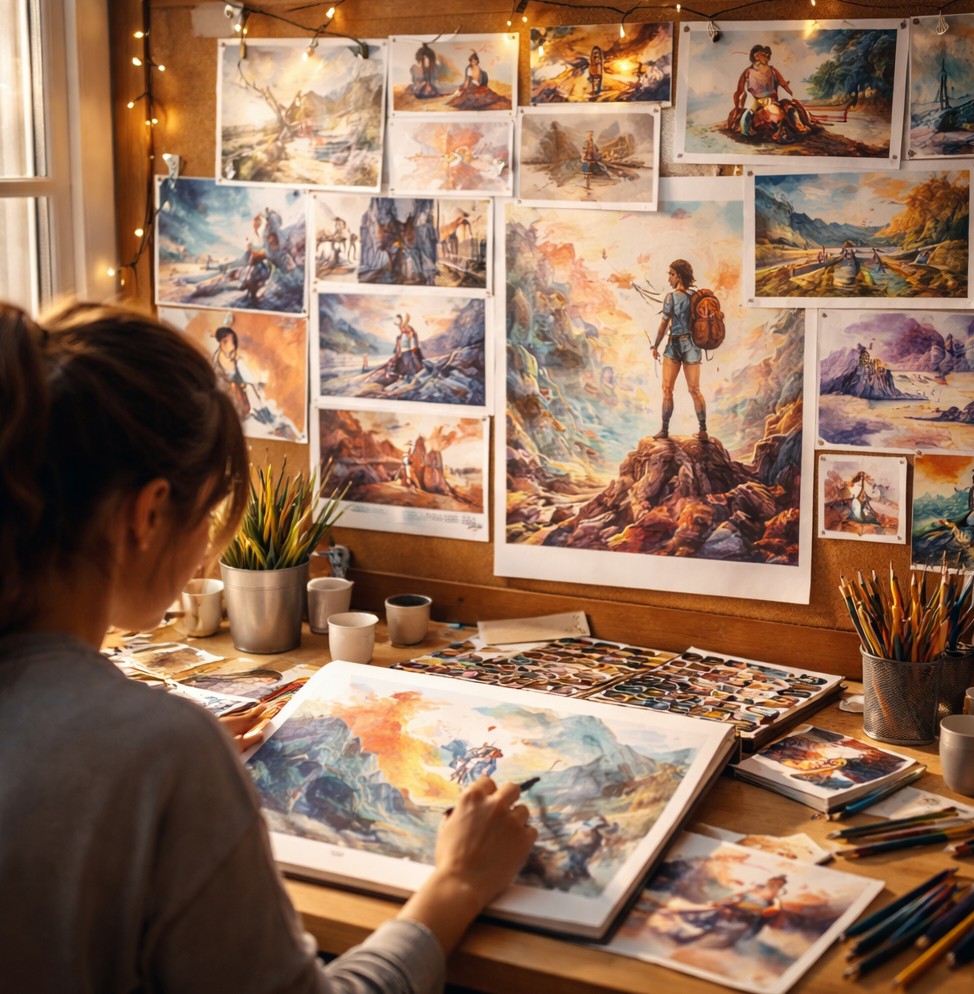
Consistency is key in visual narratives. Maintaining a uniform style throughout your story helps reinforce its tone and themes. If your narrative features hand-drawn illustrations, ensure they’re stylistically consistent to avoid jarring your audience out of the experience.
Collaborating with artists and designers can elevate your visual storytelling. These professionals bring a fresh perspective and expertise that can enrich your narrative. However, clear communication of your vision is essential to ensure the final product aligns with your story’s goals.
Accessibility should also be a consideration when crafting visual narratives. Ensure that your visual elements are inclusive, considering factors such as color vision deficiency. This might involve using text descriptions or alternative formats so that everyone can fully engage with your story.
Feedback loops are invaluable when developing visual narratives. Share early drafts with trusted peers or focus groups, gathering insights into how your visual storytelling is received. This feedback can be instrumental in refining your approach and ensuring your narrative resonates with audiences.
Ultimately, the marriage of visuals and text in storytelling is not just a trend; it’s a testament to the evolving nature of human communication. Embrace the potential of visual narratives to create richer, more engaging stories. As you experiment and innovate, you’ll find new ways to connect with audiences on a deeper level, crafting tales that linger in minds long after the final frame.